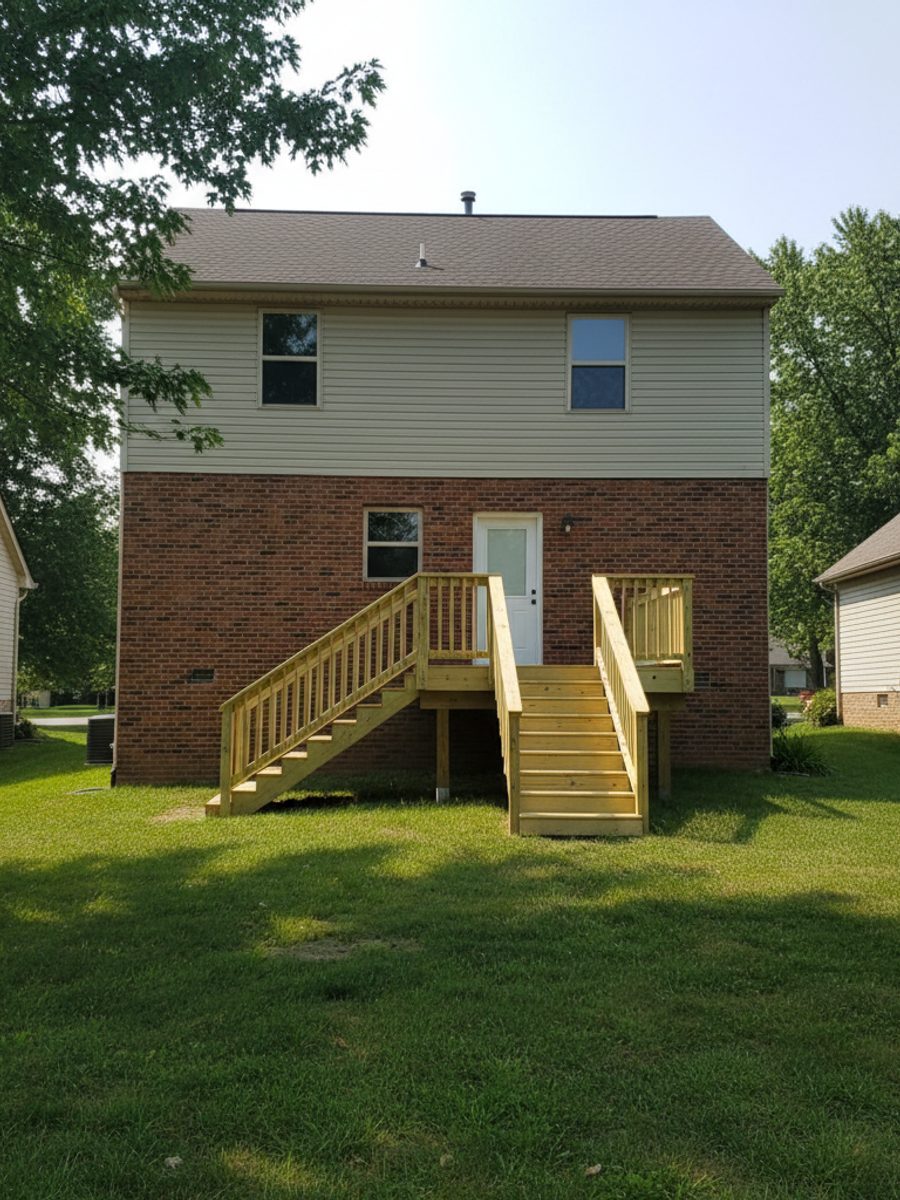
Most of the deck problems we get called out for didn't start with the decking boards. They started underground, or on paper, before the first post hole got dug. If you're planning a new deck or even replacing an old one in Shelby County, there are a handful of things worth looking at before anyone shows up with a post hole digger.
What's going on under the lawn
Shelby County sits on glacial till, which in plain terms means clay loam with a lot of clay content and poor drainage. Clay soil holds water, swells when it's wet, and shrinks hard when it dries out. That movement is exactly what pushes deck footings out of level over a few years if they weren't set deep enough to begin with. In this part of Ohio, footings need to go below the frost line, which runs around 32 inches here. A footing poured at 18 or 20 inches might hold the deck up for a season or two, then start heaving every winter as the ground freezes and thaws around it.
If the lot is on an older street near downtown Sidney or Port Jefferson Road, there's a decent chance of buried fill dirt, old cistern caps, or construction debris from when the house was built decades ago. Newer subdivisions off Fair Road or North Vandemark tend to have more consistent, compacted soil, but even there the grading around the house can settle unevenly for the first few years after construction. Either way, we dig a test hole before we commit to footing locations, not after.
Permits and where your property line actually is
The City of Sidney requires a building permit for most attached decks, and the inspection usually happens in two parts: footings before you pour concrete, and a final inspection once the structure and railings are complete. Skipping that first inspection is the most common mistake homeowners make when they try to save time, because once the concrete's in the ground there's no way to verify depth or diameter without breaking it back out.
Setbacks matter too. Residential lots in Sidney generally carry a rear and side yard setback, and it's not always what you'd guess by eye, especially on older lots that were platted before current zoning existed. If you're not sure where your line sits, a quick check with the county auditor's GIS map or a property survey saves you from building six inches into a setback and having to cut the deck back later. HOAs aren't as common here as in bigger metro subdivisions, but a few of the newer developments do have design guidelines on railing style or stain color, so it's worth a five-minute phone call before you order materials.
The ledger board and the house behind it
If the deck attaches to the house, the ledger board connection is the single point that keeps the whole structure from pulling away during a heavy snow load or a crowd of people leaning on the rail. That board needs to be lag-bolted or through-bolted into the house's rim joist, not just nailed, and it needs flashing above it that tucks under the siding to keep water from running down behind the board. We see rotted rim joists on decks that are otherwise fine, because whoever built it skipped the flashing step and water had ten years to work on the wood.
It's worth finding out what's actually behind your siding before design starts. Houses built before the 1980s around Sidney often have solid dimensional lumber framing, which takes fasteners well. Some newer construction uses engineered rim joists, which need different hardware. A fifteen-minute look from inside the basement or crawlspace tells you which you've got.
Lumber, concrete, and the weather they need
Pressure-treated lumber comes off the truck wet. If it's installed and stained too soon, the stain won't penetrate and will peel within a year. We generally want 60 to 90 days of drying time before staining a new deck, longer if it's been a wet summer. Composite decking doesn't have that problem, but it expands and contracts with heat more than wood does, so gapping between boards has to account for installing in a 50-degree spring morning versus a 90-degree July afternoon.
Concrete footings need time too. In Ohio's summer heat, concrete can gain enough strength to build on in about three to five days, but in the cooler months, especially if a late frost is in the forecast, that curing slows down and we won't frame on top of it early. Pouring concrete footings in late October or November around here means watching the overnight lows closely, because a hard freeze on fresh concrete before it's cured will weaken it permanently.
What's already there, if this isn't a first deck
For repair or replacement jobs, the first thing to check is whether the existing posts are set in concrete at all, or just resting on buried footings with no real anchor. A lot of decks built in the 80s and 90s around here used 4x4 posts bolted straight to a surface-poured pad, which was standard then but doesn't meet current code and won't survive another twenty years of freeze-thaw. Before replacing boards or railings on an older deck, it's worth pulling a few deck screws near the ledger and checking for soft, dark wood. That's usually a sign the whole structure needs more than cosmetic work.
And before anyone digs a new post hole anywhere on the property, call 811. It's free, it's required by law in Ohio, and it typically takes two to three business days for utility lines to get marked. Gas and electric lines in older Sidney neighborhoods aren't always buried where the original plat shows them.
None of this is complicated once you know to look for it, but it's the kind of thing that's easy to miss if you haven't built a few hundred of these. If you'd rather have someone walk your lot and check the soil, the setbacks, and the ledger before a shovel ever goes in the ground, that's the kind of groundwork Absolute Deck Solutions does on every job before a design gets finalized.